The first hurricane of the 2025 season is here, as Erin formed Friday morning with maximum sustained winds of 75 mph. The National Hurricane Center (NHC) is predicting that the storm will rapidly intensify into a Category 4 as it moves northwest over the Atlantic Ocean this weekend.
What is the path of Hurricane Erin?
Churning over Atlantic waters, forecast models show Erin taking a sharp turn to the northeast, keeping it away from the U.S. while passing between the East Coast and Bermuda. On Friday afternoon, the Category 1 storm was located about 415 miles east of the Northern Leeward Islands and moving west-northwest near 17 mph. Tropical storm watches have been issued for several Caribbean islands.
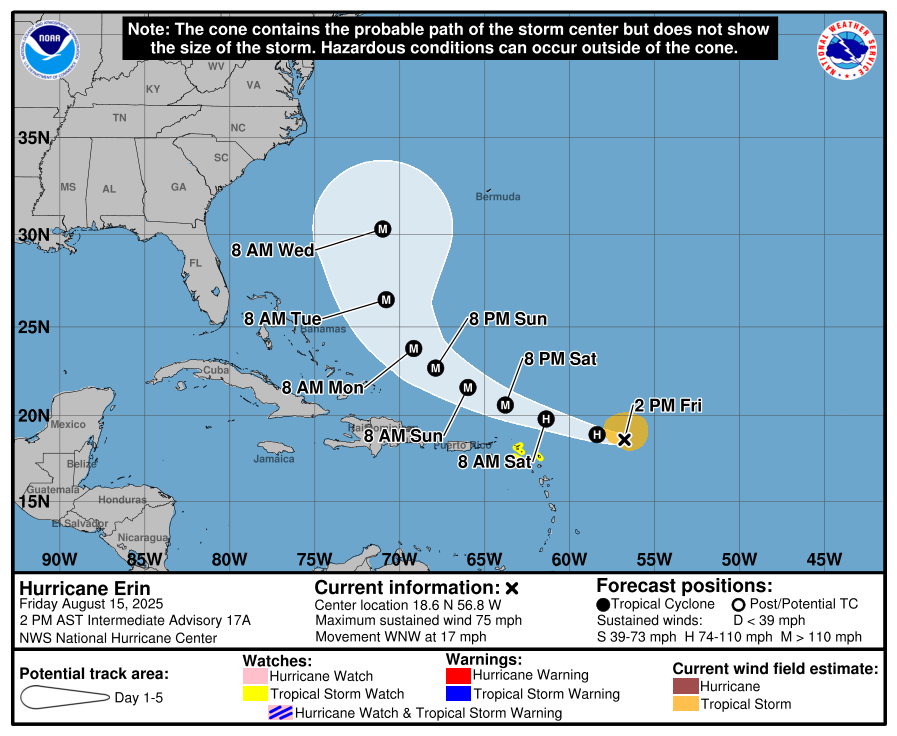
While Erin is not expected to make landfall in the U.S., rough surf and dangerous rip currents are expected next week along the entirety of the East Coast, from South Florida to Canada, according to AccuWeather.
Will Hurricane Erin impact Florida?
“While the threat of direct impacts in the Bahamas and along the east coast of the United States appears to be gradually decreasing, there will still be a significant risk of dangerous surf and rip currents along western Atlantic beaches next week,” the NHC said in its Friday advisory.
Though too early to know exactly what Florida can expect from the storm, Erin is predicted to remain hundreds of miles off the East Coast and bring rough surf and dangerous rip currents to beaches as it passes by.
Rip currents, as described by the NOAA, are powerful, narrow channels of fast-moving water that flow away from shore. There are over 100 deaths per year in the U.S. attributed to rip currents and if ever caught in one, swim parallel to the shoreline and try to reach land at an angle.
Erin is the fifth named storm of this year’s Atlantic Hurricane Season, which runs from June 1st to November 30th. Forecasts can always change, so it is best to monitor local weather sources and be prepared. For more updates on Erin and the tropics, visit the NHC website.