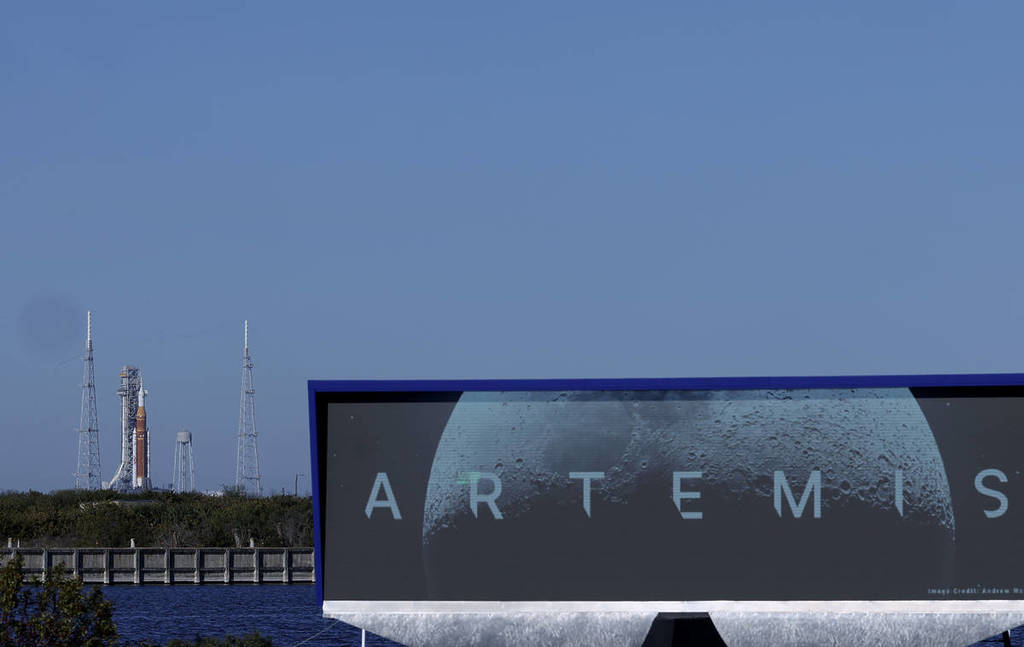

This news has us over the moon! NASA is gearing up to send astronauts further into space than any other crew has traveled before, and it’s happening right in our own backyard. The Artemis II mission is on track to launch from Kennedy Space Center in April, setting the stage for an eventual human landing on the lunar surface in more than 50 years.
Lasting for about 10 days, the mission will send a crew of four astronauts — Christina Koch, Victor Glover, Jeremy Hansen and Reid Wiseman — around the moon and back to Earth.
But they won’t be riding on just any rocket. They’ll be boarding the SLS (Space Launch System) rocket, combined with the Orion spacecraft. Standing at a whopping 322 feet tall (yes, that’s larger than the Statue of Liberty), it produces more than 8.8 million pounds of thrust during liftoff.
🌕 The flight route
While the crew won’t be touching down on the moon yet, they’ll be doing a high-speed flyby to prove the tech is safe before future landing missions. After orbiting Earth twice, they will then venture around the moon at an altitude of approximately 3,000 to 9,000 miles before returning. At this point, they would have ventured further into deep space than any human has gone since the last Apollo mission in 1972.
🚀 When it’s happening
After having to change the last planned date due to a helium-flow issue, NASA is now eyeing Wednesday, April 1 at 6:24 p.m. EDT to launch. Since this is right as the sun is getting low, it may illuminate the rocket’s exhaust plume against a darkening sky, resulting in a glowing “space nebula” effect!
🔭 How to watch
So if you’re thinking of hitting the road and seeing the launch for yourself, Titusville and Cape Canaveral are just a 3- to 4-hour drive from Miami, depending on traffic. Popular viewing spots include Jetty Park, Playalinda Beach and Space View Park, as well as Max Brewer Bridge and Cocoa Beach Pier.
The launch will also be visible from most of Florida and parts of southern Georgia, according to NASA:
So grab your friends and get ready to watch history in the making! Learn more and visit NASA’s website to get the most up-to-date information.