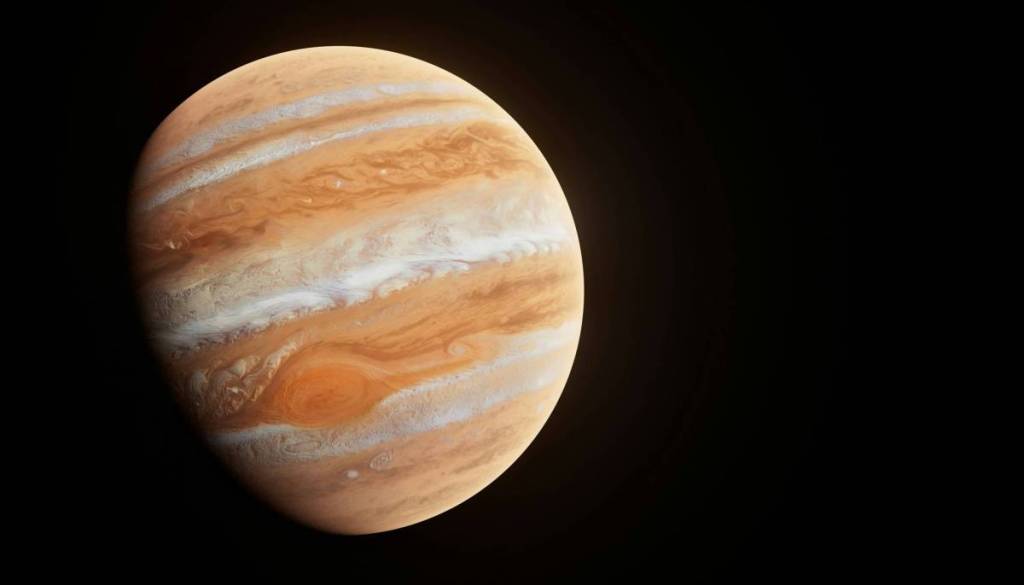

Set your alarms extremely early tomorrow for a spectacular cosmic show! On Tuesday, October 6, a waning crescent moon will pass directly in front of Jupiter, temporarily blocking the bright planet from view. It’ll completely vanish from the sky before reappearing roughly an hour later.
The rare celestial event, which astronomers call a lunar occultation, will be visible across much of the eastern and central U.S., as well as southern Canada. Of course, this includes Miami stargazers getting a front-row seat to the spectacle in the morning before sunrise.
What exactly is a “Jupiter eclipse?”
The lunar occultation occurs when the moon passes directly between Earth and a more distant celestial object, temporarily blocking it from view. On Tuesday morning, a 20%-illuminated waning crescent moon will glide in front of the planet. Because Jupiter is so huge, it won’t just vanish in a flash like a typical star. Instead, its disappearance and reappearance will each take about a full minute as the moon’s edge slowly sweeps across the planet’s disk.
How to watch it from Miami
The October 6 lunar occultation of Jupiter will be visible across parts of North America, but the eastern U.S. is especially well positioned for the event. According to Space & Telescope, the planet will disappear behind the moon at 4:20 a.m., and it will re-emerge around 5:08 a.m.
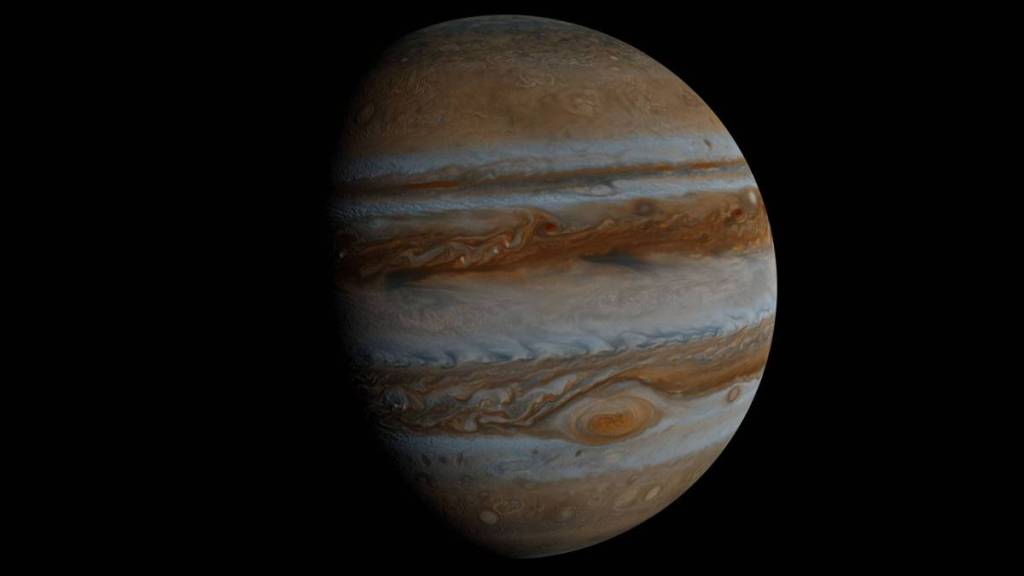
Make sure you have an unobstructed, flat view facing east-northeast. The moon and Jupiter will be relatively low on the horizon when the event begins, so tall buildings and trees could easily get in the way.
Can I see it without special equipment?
Jupiter is bright enough to see with the naked eye — it looks just like a very bright star — but if you want to view the planet’s disk or its Galilean moons slipping behind the lunar surface, you’ll need a telescope or good binoculars.
So set your timers, find a clear view facing east and cross your fingers for clear skies because we’re about to be treated to a remarkable vanishing act by our solar system’s largest planet!